



Parasite
Antiparasitics are a class of medications which are indicated for the treatment of parasitic diseases such as nematodes, cestodes, trematodes, and infectious protozoa.
Parasite Isoform Specific Products
All Product Categories
-
Parasite Related Products (2503)
Related Products (2503)

-
Related Compound Screening Libraries (1)
-
Parasite Isoform Comparison
-
Piperaquine tetraphosphate
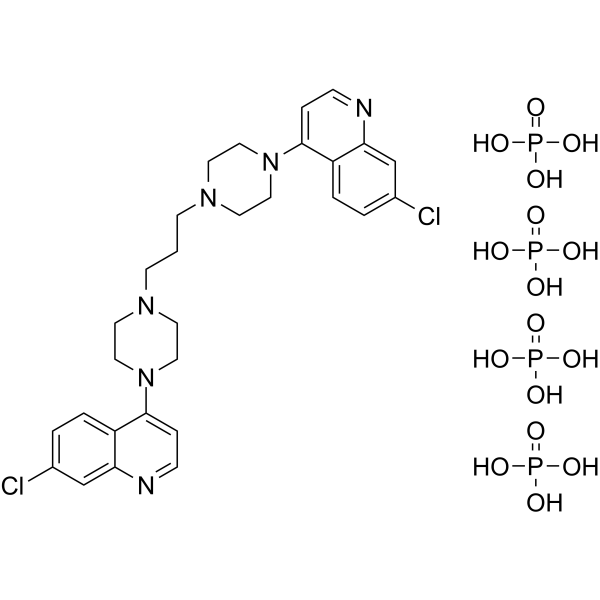 0 ImagesCat. No.: HY-118865CAS No.: 911061-10-4Piperaquine tetraphosphate is a potent antimalaria agent. Piperaquine tetraphosphate shows inhibition for chloroquine-sensitive and the chloroquine-resistant isolates. Piperaquine tetraphosphate in combination with dihydroartemisinin has the potential for the research of chloroquine-resistant malaria.
-
Human α-defensin 5
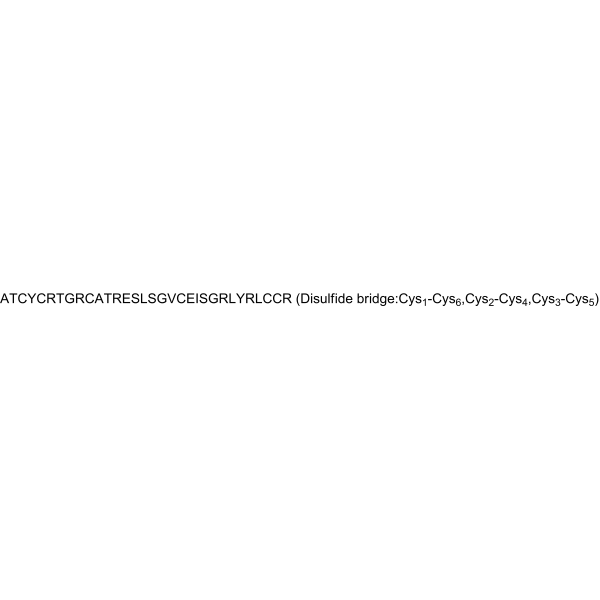 0 ImagesCat. No.: HY-P5694Human α-defensin 5 is an antiviral peptide. Human α-defensin 5 blocks infection of non-enveloped viruses, including AdV, HPV, and polyomaviruses (IC50: 0.6-1.25 μM for HPV16). Human α-defensin 5 can bind to the viral capsid and blocks escape of the virus from the endosome. Human α-defensin 5 increases HIV binding to the cell surface. Human α-defensin 5 also has parasiticidal activity.
-
Crassicauline A (Standard)
 0 ImagesCat. No.: HY-N1924RCAS No.: 79592-91-9Synonyms: Crassicaulin A (Standard)Crassicauline A (Crassicaulin A) Standard is the analytical standard of Crassicauline A (HY-N1924). This product is intended for research and analytical applications. Crassicauline A (Crassicaulin A) is a diester-type diterpenoid alkaloid. Crassicauline A exhibits feeding deterrent activity against adult Tribolium castaneum, with a EC50 of 1134.5 ppm. Crassicauline A induces arrhythmia at a dose of 0.10 mg/kg.
-
Antitrypanosomal agent 8
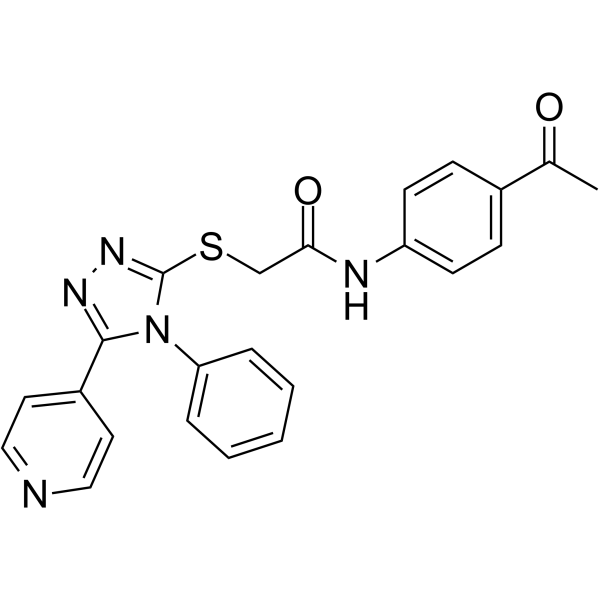 0 ImagesCat. No.: HY-147933CAS No.: 332376-42-8Antitrypanosomal agent 8 (compound 3b) has potent antitrypanosomal activity against Trypanosoma brucei with an IC50 value of 0.79 μM and exhibits certain cytotoxicity in L6 cells (IC50=80.95 μM).
-
Antimalarial agent 26
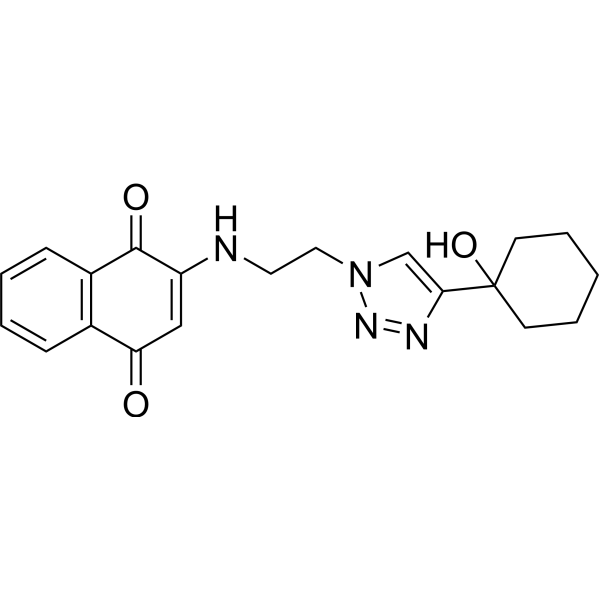 0 ImagesCat. No.: HY-149939CAS No.: 2299199-56-5Antimalarial agent 26 is an orally active 1,4-naphthoquinones derivative with antimalarial activities. Antimalarial agent 26 shows cytotoxicity against P. falciparum and selectivity over mammalian cell lines. Antimalarial agent 26 inhibits P. burghei induced parasitemia in vivo.
-
(-)-Fucose-13C-1
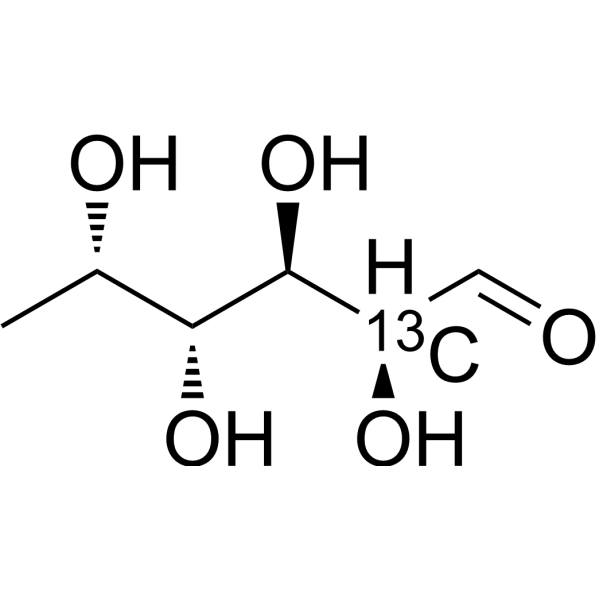 0 ImagesSynonyms: 6-Desoxygalactose-13C-1; L-(-)-Fucose-13C-1; L-Galactomethylose-13C-1(-)-Fucose-13C-1 is the 13C labeled (-)-Fucose. (-)-Fucose is classified as a member of the hexoses, plays a role in A and B blood group antigen substructure determination, selectin-mediated leukocyte-endothelial adhesion, and host-microbe interacti[
-
Diethyltoluamide-d10
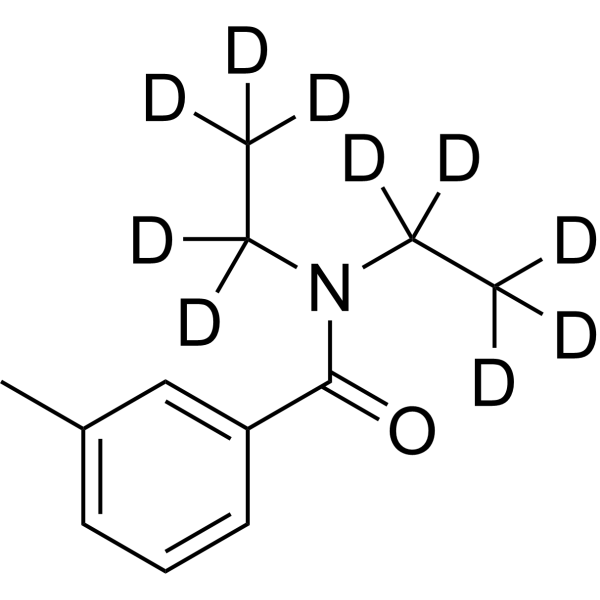 0 ImagesCat. No.: HY-B0978SCAS No.: 1215576-01-4Synonyms: DEET-d10; N,N-Diethyl-m-toluamide-d10Diethyltoluamide-d10 is the deuterium labeled Diethyltoluamide. Diethyltoluamide is the most common active ingredient in insect repellents. It is intended to provide protection against mosquitoes, ticks, fleas, chiggers, leeches, and many other biting insects.
-
Antileishmanial agent-24
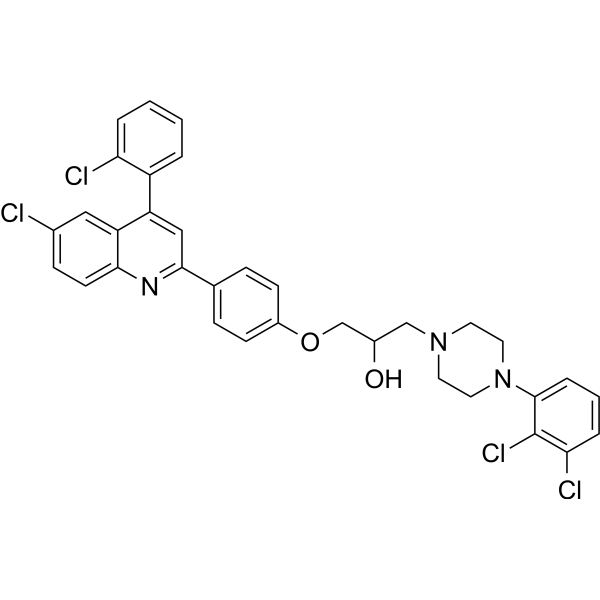 0 ImagesCat. No.: HY-155301CAS No.: 2999670-36-7Antileishmanial agent-24 (compound 33) is an antileishmanial agent with an IC50 of 5.39 μM against amastigote.
-
Antiparasitic agent-6
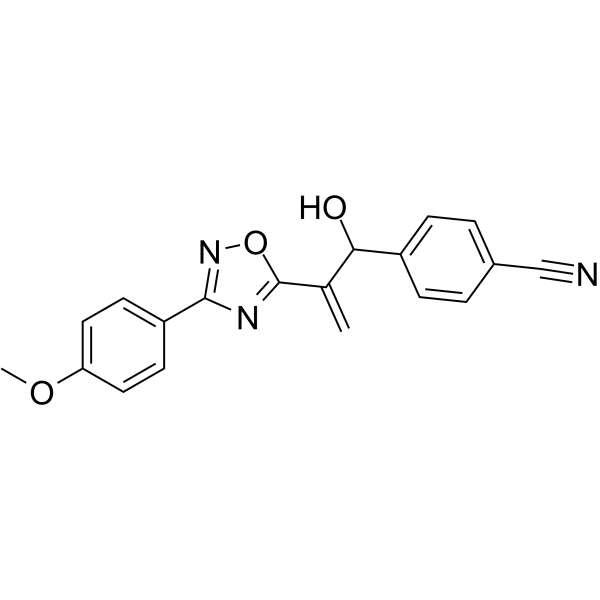 0 ImagesCat. No.: HY-146044CAS No.: 2253996-73-3Antiparasitic agent-6 (compound 5b) has selectively antiparasitic activity against Leishmania infantum (L. infantum) with an IC50 value of 3.89 μM. Antiparasitic agent-6 also has certain cytotoxicity against HepG2 (CC50 = 13.64 μM).
-
Amabiline
 0 ImagesCat. No.: HY-119688CAS No.: 17958-43-9Amabiline is a compound isolated from a plant that contains a variety of bioactive ingredients including Amabiline. The plant as a whole has a variety of traditional uses and also has certain pharmacological activity and toxicity.
-
Purine phosphoribosyltransferase-IN-1
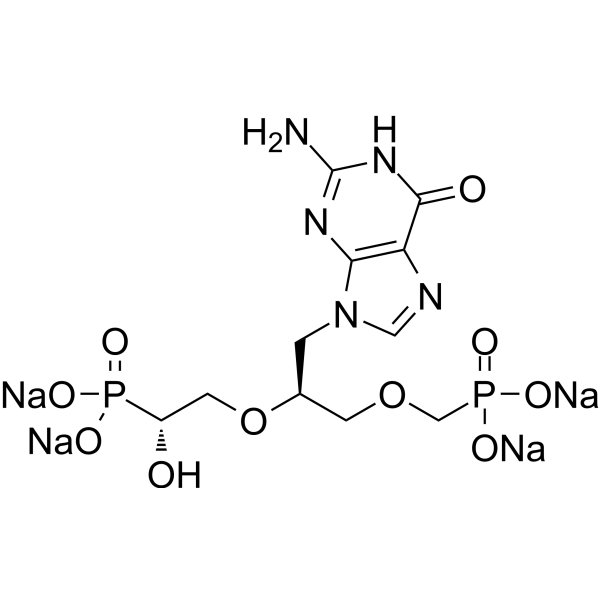 0 ImagesCat. No.: HY-144294CAS No.: 2784631-28-1Purine phosphoribosyltransferase-IN-1 (Compound (S,R)-48) is a potent inhibitor of the Plasmodium falciparum (Pf), P. vivax (Pv) and Trypanosoma brucei (Tbr) 6-oxopurine purine phosphoribosyltransferases (PRTs), with Ki values of 50, 20, and 2 nM, respectively.
-
SLU-10482
 0 ImagesCat. No.: HY-158776CAS No.: 2755451-45-5SLU-10482 is an orally active anti-parasitic agent, that inhibits Cryptosporidium parvum with an IC50 of 0.0687 μM. SLU-10482 exhibits anti-infective efficacy in C. parvum infected mice with an AC50 of 0.0686 μM.

-
S-MGB-234
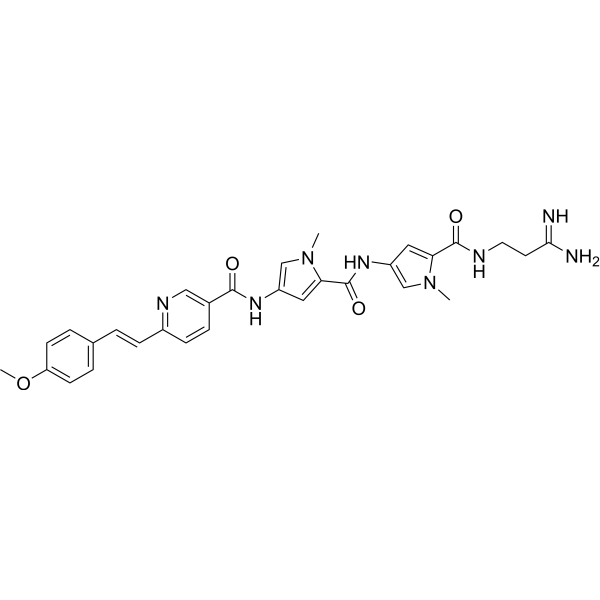 0 ImagesCat. No.: HY-145287CAS No.: 1970223-53-0S-MGB-234 is a minor groove binder of Animal African Trypanosomiasis (AAT). S-MGB-234 displays excellent in vitro activities against the principal causative organisms of AAT; Trypanosoma congolense, and Trypanosoma vivax. S-MGB-234 does not show cross-resistance with the current diamidine agents and are not internalized via the transporters used by diamidines.
-
Anti-infective agent 1
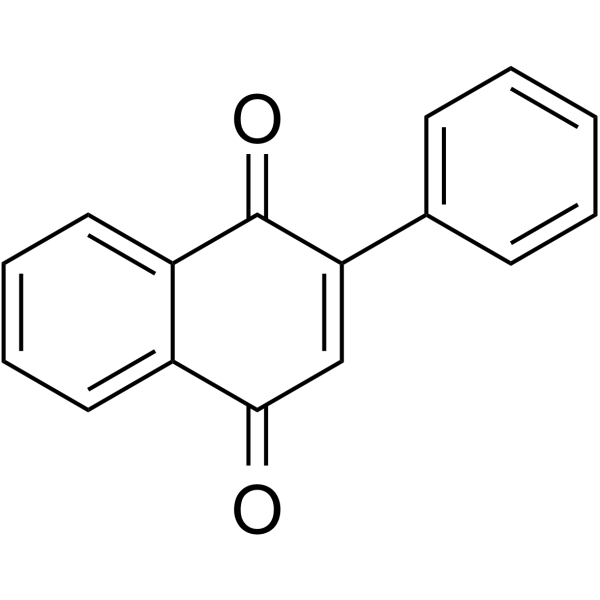 0 ImagesAnti-infective agent 1 (compound 3a) is a potent and selective antiprotozoal and antimycobacterial agent. Anti-infective agent 1 shows antiparasitic activity against P. falciparum and T. brucei rhodesiense, with IC50 values of 10.95 and 0.06 μM, respectively. Anti-infective agent 1 shows antimycobacterial activity against Mycobacterium smegmatis with a MIC of 8 μg/mL.
-
Ac-Atovaquone
 0 ImagesCat. No.: HY-168656CAS No.: 129700-44-3Ac-Atovaquone is a potent cytochrome bc1 inhibitor and also is an ester-linked acetyl derivative of atovaquone (HY-13832). Ac-Atovaquone has the potential for the research of malaria.
-
Kochiae fructus extract
 0 ImagesCat. No.: HY-N20344Synonyms: Kochia scoparia fruit extractKochiae fructus extract (Kochia scoparia fruit extract) is an extract of Kochia scoparia (L.) Schrad., containing a variety of bioactive components with anti-inflammatory, anti-diabetic, insecticidal, anti-allergic, antipruritic, and anti-rheumatoid arthritis activities.
-
Ivermectin B1a-d2-1
 0 ImagesCat. No.: HY-126937SIvermectin B1a-d2-1 is the deuterium labeled Ivermectin B1a (HY-126937). Ivermectin B1a, a derivative of Avermectin B1a (HY-15308), is a main component of Ivermectin (HY-15310). Ivermectin (MK-933) is a broad-spectrum anti-parasite agent. Ivermectin is a candidate therapeutic against SARS-CoV-2/COVID-19.
-
ELQ-650
 0 ImagesCat. No.: HY-163484CAS No.: 3023710-00-8ELQ-650 is a quinolone derivative, that exhibits antimicrobial activity against several protozoan parasites, including the intraerythrocytic parasites Plasmodium and Babesia. ELQ-650 attenuates babesiosis in immunosuppressed mice.



